The Core Truth: Stop acting like you are picking items from a restaurant menu. You cannot afford an independent house in a metro city, or even most Tier-2 cities, so stop wasting the most energetic years of your life debating it. If you buy a plot far outside the city just to say you own “luxury,” you are building a cage for your family. Buy what you can actually afford near public transport and decent residential areas. Do this so your family can actually have a life, and when disaster strikes, your spouse can work and your family can survive.
Let us assess the benefits of an individual house and an apartment. After finding out the benefits and drawbacks of both, then we can decide what we should buy.
Wait a minute. Do you think houses and apartments are sitting somewhere in the city with your name written on them? First you choose one. Then you go and buy it. That is how people imagine the market works. But reality is different. It is not your wish what you want to buy. It is what you can afford to buy.
You think you can buy a house or apartment whatever you want? Show me a normal person who can buy an individual house—not a luxury villa, just a basic house—in Bangalore, Mumbai, or Delhi today. Forget the metros. Even in many Tier-2 cities, you cannot easily buy an individual house today. You cannot even find 50 yards of land in many residential areas.
The debate of House Vs Apartment is often handled like a dream, but in the Indian market, it is a calculation of survival. Then what is the point of sitting and thinking for two years: Should I buy a house? Should I buy an apartment? That discussion itself delays at least two very important and energetic years of your life. You cannot turn back that time. It becomes one of the biggest time-wasting exercises in owning a home.
The Whitefield Reality Check: The Far-Away Plot
So what should we actually do? First, check affordability. Not your dreams. Not your wishes. Your affordability. Where are you living? Where are you trying to live? Not wishing to live—actually living. Everyone says: “I want to live in a very good area.” That is fine. But can you afford it?
Let us take an example. Suppose you are a software employee working in Whitefield, Bangalore. Now what are your options? In Whitefield today, nobody is building small individual houses for sale. Actually, there are no empty residential plots left in good locations. Even if some plots exist, they have become status symbols. Owners do not sell them unless they are in a serious financial emergency.
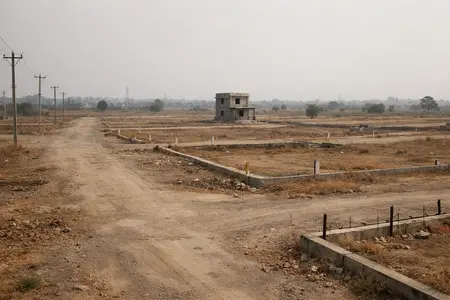
So what do you do? You go nearly 25 to 30 kilometres outside the city looking for a square plot suitable for construction in a new layout. You find a layout. But look around:
: No houses built yet.
: No proper drainage connection.
: No water supply.
: No Nearby shopping facilities.
: No Public Transport.
If you somehow build a house there, you will live almost alone for 10 to 15 years. Many people realize this only after they buy the plot and exhaust their savings. So after seeing all this, slowly you understand one brutal thing: You may never realistically buy an individual house in the area where you actually live and work.
The Builder’s Trap: The Illusion of Luxury Apartments.
So what option is left? An apartment. Then the next confusion starts. Which apartment should you buy? You start visiting many projects. Luxury apartment. Premium apartment. Ultra-luxury apartment. You see advertisements everywhere. Your friends give suggestions.
But the truth is this: You do not know the builder. You do not know the land history. You do not know the documents. Builders do not show you documents first. What do they show you? A beautiful sample flat. They blind you with branded tiles, branded sanitary fittings, and a modular kitchen.
You walk inside, imagine your life there, and slowly convince yourself that this is the right decision. Then you book the flat. After that, you spend even more money on interior decoration to impress society. Finally, you wake up and realize something dark: You now have a heavy home loan locked around your neck for the next twenty years, paying for glossy paint and imported tiles instead of actual land value, reliable water supply, clean air, and a livable neighbourhood.
This is the process many people follow. But that should not be your process. First, you must clearly decide one thing. You are not choosing between an individual house, an apartment, or a luxury villa. What “luxury” are builders talking about today? Many so-called luxury villas are nothing but 90-yard houses standing wall-to-wall without even proper parking space.
👉 Read Next: Why I Prefer Ready-to-Move Apartment vs Under Construction — Even at 10-15% Higher Cost
Can You Afford an Independent House? Starting from Zero
Before dreaming about house types, take a hard look at your financial reality. What is your net worth? Stop counting your parents’ agricultural land or a two-portion house in your town. That property will only come to you when you are sixty; you cannot use it to buy a house today.
Unless your parents are currently handing you the papers to a plot, accept reality: You are starting from zero. And that is perfectly fine.
If your parents already kept a plot or house for you somewhere, that is good. If not, then accept one thing clearly: You are starting from zero. That is perfectly fine.
Now check your real life situation. Where are you working? What is your job profile? What is your income growth likely to be? Are you a clever fellow in your twenties or early thirties who realized early that owning a home matters? Or are you an average guy who suddenly wants to buy because all your friends bought an apartment?
Whoever you are, remember this: Your housing decision should depend on your job profile and life situation—not your age.
The Survival Rules: Choosing a House Vs Apartment based on Location
Even if you want to buy a house, you cannot go and live in a slum area. That is not a solution either. So if you are forced by your budget to buy an apartment, remember one very important rule: Always try to buy near a main road. If you cannot afford that, at least buy near a bus stop.
Many builders construct apartments two or three kilometers inside interior roads because the dirt is cheaper there. They trap you. The apartments you see today beside shopping complexes and bus stops were actually built before the area developed.
Now, look at the apartments near the residential area, markets. Those apartments look great. But remember, it happens the other way around: the apartments come first, and then the shopping complexes and bus stops came near the apartments. Location matters far more than fancy interiors. Safety, convenience, and daily life become much easier if the apartment is near a road or bus stop. It is the deciding factor for your family life.
Your house should not only suit your job; it should also support your family’s future logistics:
- Schools: Check whether good schools for your children are easily reachable.
- Activities: Check whether the area has basic activities for children—playgrounds, tuition centers, and small parks.
The Second Income Shield : Why Apartment Location Matters

Most importantly, think about second job opportunities for your spouse if needed. Why? If your wife can get a side job in a school or an office, it will add crucial stability to your life. But this is only possible when your home is located near a residential area and have reliable transport.”.
When people buy a plot or an apartment in an isolated layout far from the city, they don’t realize what they are doing—they are building a cage for their family. A home with good transport access and nearby residential and commercial activity gives your family survival options. If disaster strikes and income stops, your spouse can step out and quickly find work—through tuitions, a nearby school job, managing a local shop, or starting a small home business.
A house in a well connected, living society gives your family the power of a second income. A house in a dead layout takes that power away and leaves you completely at the mercy of your boss. These practical things matter far more than branded tiles in the bathroom.
The True Power of Individual Houses
Now, does that mean you should never buy an independent house? No. I am not saying that. If you can afford or get an individual house near a good residential area, it is going to be a great buy not only for you but even for upcoming generations.
But while looking at an independent house, don’t focus on interior luxury, tiles, or painting. Those things can be changed anytime. The thing you should focus mainly on is that the house must be in a residential area, and the locality (the society) must be good. There is no compromise on those things.
If you can get a good plot in a residential area, that is also a great thing. You can simply design it and put up a single floor. When you get good money or a promotion, you can do all the interiors, painting, etc. If you can get a plot of 150 yards, that’s gold.
However, an already built house of 100 yards is also perfectly good. Many builders nowadays are building 90-100 yard houses. There is no problem with that.
The biggest advantage of an independent house is flexibility. You can add another floor even after 10 years. It is always possible to add a room, if we have an independent home. We can add a floor, and it can become two houses. We may not earn good money now, but if your children get settled, they themselves can construct whatever they want. That flexibility is the greatest strength of an independent home.
Further, if you want to understand why every homeowner should build a separate House Repair Fund, read our article.
Conclusion: Stop Debating, Start Acting
Just remember: it does not matter what you wish to buy. What you can afford and where you are buying is far more important than anything else. Do not waste years debating between a house or an apartment. First, understand your reality.
Whether it is an apartment or an independent house, three things are non-negotiable:
- Location.
- Society.
- Connectivity to a road or public transport.
Everything else—interiors, luxury fittings, fancy advertisements—comes later. A home shapes your family life, your safety, and your daily routine for decades. Make the decision with clear thinking, not dreams.
Frequently Asked Questions
Is it better to buy an independent house or an apartment in a city?
The choice between a house and an apartment is dictated by affordability, not just preference. In major metros and Tier-2 cities, independent houses in central locations have become status symbols that are often out of reach for average earners. At WealthDharma, we advise buying what you can realistically afford near public transport rather than wasting years debating a “menu” of choices you cannot access.
Should I buy a cheaper plot far outside the city to build a house?
Buying a plot 30 kilometers outside the city just for the sake of owning “luxury” is effectively building a “cage” for your family. Remote layouts often lack proper water, drainage, and public transport, leaving you isolated and entirely dependent on your job. WealthDharma recommends prioritizing a connected location—even if it means a smaller apartment—so your family has access to schools, shops, and safety.
What are the most important factors to check before buying an apartment?
Location and connectivity are non-negotiable; never be trapped by fancy interiors or branded tiles. Always ensure the property is near a main road or a bus stop to support your family’s future logistics and daily routine. At WealthDharma, we believe a home’s true value lies in its proximity to schools, playgrounds, and transport, rather than the “illusion of luxury” created by sample flats.
How does my home’s location affect my family’s financial security?
A home in a well-connected, living society acts as a “second income shield” for your family. If disaster strikes and you lose your primary income, a house near transport allows your spouse to easily find work or start a home business. A house in a “dead layout” far from the city takes this power away, leaving you at the mercy of a single paycheck.
What is the biggest advantage of owning an independent house?
The greatest strength of an independent home is flexibility for future generations. Unlike an apartment, a house allows you to add additional floors as your income grows or as your children settle down. While the initial purchase may be a basic structure, the underlying land value and the ability to expand make it a powerful long-term asset.
About the Author The Hard-Asset-Architect is an everyday employee who woke up to a rigged financial system. WealthDharma exists to cut through the false narratives of paper wealth and advocate for the only real escape route: physical ownership of homes, land, and gold. [Read the full ideology here.]
Disclaimer: This article is intended for educational and informational purposes only. It reflects general financial principles and the author’s views on home ownership. It should not be considered legal, tax, financial, or real estate advice. Every family’s financial situation is different. Please evaluate your own circumstances and consult a qualified professional before making significant financial decisions. For additional information, please read our full Disclaimer.